


Why Do People Choose an Air Compression Recovery System?
Recovery is no longer limited to professional sports teams. Today, gyms, recovery centers, rehabilitation businesses, and fitness facilities are also adding recovery equipment to their services. Among these options, an air compression recovery system is popular because it is simple to operate, easy to fit into a recovery routine, and suitable for many professional environments.
But for distributors, wholesalers, and resellers, choosing the right product requires more than checking whether the boots look good. Product design, compression control, materials, production quality, customization, and factory support can all affect the buying decision.
This guide explains why people choose air compression recovery and what B2B buyers should check before placing a medium or large order.
- Why Choose Air Compression Recovery?
- How Does Pneumatic Recovery Work?
- Key Features to Check
- Why Air Compression Leg Recovery Is Popular
- Common Professional Applications
- B2B Buyer Checklist
- Buying Compression Recovery Equipment Wholesale
- Private Label and OEM Options
- Why the Manufacturer Matters
- Why Choose KONBEST?
- A Practical Buying Process
- Final Thoughts
- Q&A
Why Choose Air Compression Recovery?
The first reason is convenience. Many users want a recovery solution that can be used without a complicated setup. An air compression system normally uses a controller, air pump, air tubes, and inflatable chambers inside the boots or sleeves.
After the boots are connected, the user can select a suitable program and start the session. This makes the equipment easy to add to a gym, recovery room, training center, or wellness space.
Another reason is controlled compression. Instead of relying on a passive sleeve, a pneumatic recovery system actively controls air pressure inside different chambers. The chambers can inflate and release air according to the selected program.
For users, this creates a more structured recovery experience. For B2B buyers, it also provides more product features to evaluate when comparing different suppliers.
Simple Operation
Simple controls are important in commercial environments. Staff should be able to explain the basic operation without spending too much time on training.
Large Leg Coverage
Recovery boots can cover a large part of the legs. This makes them suitable for users who want a full-leg compression experience instead of equipment that only covers a small area.
Flexible Use
The same product category can be used in sports, fitness, recovery, and suitable rehabilitation settings. This makes it interesting for distributors that serve several customer groups.
How Does Pneumatic Recovery Work?
A pneumatic recovery system uses air pressure to create a programmed compression cycle.
The controller sends air into the chambers inside the boots. When a chamber fills, it applies compression to the area covered by that chamber. The air is then released or moved according to the program, and the cycle continues.
The exact design varies between models. Some products may use different numbers of chambers, pressure settings, or programs. Therefore, buyers should always check the actual specifications of the model they plan to purchase.
A good sample inspection should include several simple tests:
- Check whether the system starts and stops correctly.
- Test different available programs.
- Change the pressure setting and check the response.
- Observe whether the air chambers inflate smoothly.
- Check the air tubes and connectors.
- Inspect the boot material and stitching.
- Check whether the boots are easy to put on and remove.
These tests can reveal problems that are not visible in product photos.
Key Features to Check
When selecting an air compression recovery system for professional use, buyers should focus on practical product details.
Compression Control
Pressure control is one of the first specifications to review. Different users may prefer different levels of compression, so adjustable settings can make a product more flexible.
Ask the manufacturer for the actual pressure range and available modes. Do not assume that two products with similar appearances have the same compression performance.
Air Chamber Design
The number and layout of air chambers can affect how compression is delivered through the boots. Buyers should understand how the chambers work and whether the design matches their target application.
Controller Design
The controller should be easy to understand. Buttons, displays, settings, and connections should be checked during sample testing.
Boot Construction
Look at the fabric, seams, fastening system, air chambers, tubes, and connectors. These parts receive regular handling and should be suitable for the intended environment.
Accessories and Spare Parts
For B2B purchasing, accessories should not be overlooked. Ask whether the manufacturer can provide replacement tubes, connectors, chargers, bags, or other suitable accessories when required.
Why Air Compression Leg Recovery Is Popular
The legs are heavily used during running, cycling, football, basketball, strength training, and many other activities. Because of this, air compression leg recovery products are often designed to cover the calves, thighs, and other parts of the legs.
For a sports team, compression boots may be placed in the team recovery room. For a gym, they can be included in a dedicated recovery area. For a recovery studio, several units can be placed together to support multiple users.
For distributors and wholesalers, this broad range of applications can make the product easier to introduce to different B2B customers.
However, buyers should keep product claims accurate. Compression equipment should be marketed according to its actual specifications, certifications, intended use, and the regulations of each target market.
Common Professional Applications
Sports Teams and Training Centers
Professional and amateur sports teams can use recovery equipment in training centers, locker rooms, and dedicated recovery spaces. Multiple units may be useful when several athletes need access to equipment around the same time.
Gyms and Fitness Clubs
Fitness clubs can add compression equipment to a recovery zone. This allows the gym to offer more than traditional exercise equipment and gives members another option within their recovery routine.
Recovery Studios
Recovery studios often need equipment that is easy to operate and suitable for repeated sessions. Product consistency becomes especially important when several machines are purchased.
Physical Therapy and Rehabilitation Businesses
Suitable compression recovery equipment may be considered for certain rehabilitation applications. Buyers should check local rules and professional requirements before deciding how a product can be used or promoted.
Distributors and Resellers
Distributors and resellers can supply compression recovery equipment to sports clubs, gyms, recovery centers, wellness businesses, and other suitable customers. A flexible product range can make it easier to serve different market segments.
B2B Buyer Checklist
For a medium or large order, buyers should look beyond the unit price. A low-cost product may not be the right choice if its specifications, quality, or supply support do not match the target market.
Before placing an order, check:
- Compression technology
- Pressure range
- Number of air chambers
- Available programs
- Controller functions
- Boot coverage
- Available sizes
- Fabric and stitching
- Air tube quality
- Connector construction
- Accessories
- Spare parts
- Quality inspection
- Certifications for the target market
- MOQ
- Production capacity
- Lead time
- Packaging
- Warranty terms
- Factory inspection support
This checklist helps B2B buyers compare the full supply program instead of comparing price alone.
Buying Compression Recovery Equipment Wholesale
When purchasing compression recovery equipment wholesale, start with the application and target customer.
For example, a distributor serving sports teams may need professional specifications and several units per order. A wholesaler serving fitness stores may need a different package and accessory combination. A reseller building a new recovery brand may focus more on product appearance, packaging, and private label support.
Once the target market is clear, request product specifications and samples. Test the actual equipment before approving the bulk order.
After testing, confirm the final configuration with the manufacturer. This should include the product model, compression settings, accessories, packaging, logo requirements, quantity, inspection requirements, and delivery schedule.
For larger projects, buyers should also discuss future supply. If the first order is successful, the factory should have the production ability and quality system to support repeat orders.
Private Label and OEM Options
Accessories
Some B2B buyers do not want a standard product. They want equipment that matches their own brand.
KONBEST supports suitable OEM and ODM projects and can provide customization options such as:
- Private label logo
- Product color
- Package design
- Accessories
A good private label project should begin with clear specifications. Buyers should provide the required logo, colors, packaging design, and accessory details before production.
Sample approval is also important. The buyer can check the customized product first and confirm the final design before moving into larger production.
This approach is useful for distributors, wholesalers, and resellers that want a consistent branded product across different sales channels.
Why the Manufacturer Matters
The quality of the manufacturing partner can affect the whole B2B project.
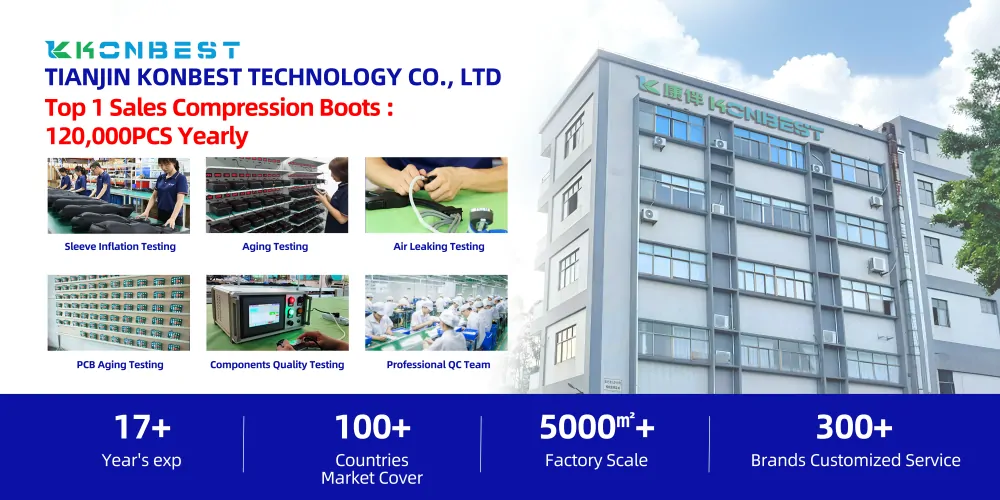
A suitable manufacturer should have more than a product catalog. Buyers should look at R&D resources, production lines, quality inspection, customization ability, sample support, delivery capability, and after-sales service.
Manufacturing capacity is especially important for large orders. A supplier may produce a good sample but still have difficulty maintaining the same specifications across a larger batch. This is why factory capability should be checked before a major purchasing decision.
Why Choose KONBEST?
KONBEST has more than 17 years of experience in sports recovery equipment R&D and manufacturing. The company has supplied products to more than 100 countries and has experience supporting more than 300 customized brands.
Its manufacturing base covers 12,000 square meters and includes 5 production lines, a high-end product showroom, and professional R&D and quality inspection teams.
KONBEST supports OEM and ODM projects for B2B customers. Suitable projects can include private label logo, product color, packaging, and accessory customization.
The company also supports 2-day sampling for suitable projects, 7-day shipping for suitable orders, and factory inspection for B2B buyers who want to evaluate the production environment before placing a larger order.
Another advantage for distributors and wholesalers is the wider sports recovery product range. Instead of sourcing only one product, B2B customers can discuss a broader recovery equipment program with one experienced manufacturer.
A Practical B2B Buying Process
1. Define Your Target Customer
Identify whether your customers are sports teams, gyms, recovery centers, rehabilitation businesses, retailers, or online resellers.
2. Match the Product to the Application
Choose the compression system, pressure settings, boot coverage, controller, accessories, and package according to the target market.
3. Request a Sample
Test the actual product before placing a medium or large order. Check the operation, compression cycle, boot construction, tubes, connectors, and overall user experience.
4. Confirm the Specifications
Once the sample is approved, record the exact specifications that will be used for bulk production.
5. Confirm Customization
For private label projects, finalize the logo, color, packaging, and accessory requirements before production starts.
6. Review Factory Capability
Check production capacity, quality inspection, R&D resources, certifications, and factory conditions. Factory inspection can provide additional confidence for larger projects.
7. Plan Repeat Orders
Do not focus only on the first shipment. Discuss future production, replacement parts, packaging, and product consistency with the manufacturer.
Final Thoughts
People choose air compression recovery because it is convenient, controlled, and easy to include in many recovery environments. A well-designed pneumatic recovery system can fit into sports facilities, gyms, recovery studios, and other suitable professional settings.
For B2B buyers, however, the product itself is only one part of the decision. The compression system, air chambers, pressure control, boot materials, controller, quality inspection, customization, production capacity, and factory support should all be reviewed before a larger purchase.
KONBEST combines more than 17 years of sports recovery equipment manufacturing experience with a 12,000-square-meter manufacturing base, 5 production lines, international supply experience, and customization experience with more than 300 brands.
For distributors, wholesalers, and resellers, a sample-first approach is a practical way to test the product, confirm the specifications, and build a clearer purchasing plan before moving into medium or large-volume orders.
Q&A
Q1: What is an air compression recovery system?
An air compression recovery system uses an air pump, controller, tubes, and inflatable air chambers to create a programmed compression cycle through boots or sleeves.
Q2: Why do people choose pneumatic recovery systems?
They are convenient, simple to operate, and can provide controlled compression through different settings and programs.
Q3: Who can use air compression recovery equipment?
Sports teams, gyms, recovery centers, fitness businesses, distributors, resellers, and suitable rehabilitation businesses may consider this type of equipment according to their needs and local requirements.
Q4: What should wholesalers check before buying?
They should check the compression system, pressure settings, air chamber design, controller, boot construction, materials, accessories, quality inspection, certifications, MOQ, production capacity, lead time, and warranty support.
Q5: Can KONBEST provide private label recovery equipment?
Yes. Suitable OEM and ODM projects can include private label logo, product color, packaging, and accessories.
Q6: Can KONBEST support wholesale orders?
Yes. KONBEST works with distributors, wholesalers, resellers, and other B2B customers on medium and larger purchasing projects.
Q7: Can I request a sample before placing a bulk order?
Yes. KONBEST supports 2-day sampling for suitable projects, allowing buyers to evaluate the product before moving into larger production.
Q8: Can buyers inspect the factory?
Yes. Factory inspection support is available for B2B buyers who want to review manufacturing conditions before placing a larger order.