


How to Find a Long-Term Cold Therapy Equipment Partner
Finding a cold therapy equipment supplier is easy. Finding one that can stay reliable when your orders grow is much harder.
For distributors, wholesalers, resellers, sports recovery brands, gyms, physiotherapy centers, and rehabilitation equipment companies, the first order is only the beginning. A supplier may provide a good sample, but the real test comes when you need repeated orders, several product models, private label packaging, stable quality, and fast production at the same time.
A long-term partnership should therefore be judged by more than the first quotation. You need to look at product range, technical performance, production capability, customization, quality control, delivery, and communication before moving into medium or large-volume purchasing.
KONBEST focuses on sports recovery equipment and has more than 17 years of R&D and manufacturing experience. Its cold therapy equipment range is designed for distributors, brands, gyms, sports teams, physiotherapy centers, and rehabilitation-related businesses. The company also provides OEM/ODM and private label support for different markets.
- 1. Define What You Need Before Choosing a Supplier
- 2. Look for a Product System, Not Just One Machine
- 3. Compare the Details Behind the Product
- 4. Match Equipment to Different B2B Markets
- 5. Use Samples to Test the Partnership
- 6. Check Private Label and OEM/ODM Capability
- 7. Quality Control Must Work at Bulk Scale
- 8. Check Whether the Factory Can Handle Larger Orders
- 9. Look Beyond the Factory Gate
- 10. Why KONBEST Fits Long-Term B2B Cooperation
- Q&A
1. Define What You Need Before Choosing a Supplier
The best supplier depends on what you plan to sell.
A wholesaler supplying gyms may need simple and easy-to-use equipment. A sports recovery distributor may need several models for professional users. A rehabilitation equipment reseller may need more technical product information, stable quality, accessories, manuals, and after-sales support.
Before contacting a factory, make a simple purchasing list:
- Target customer type
- Expected monthly or quarterly order volume
- Required product type
- Target temperature or cooling performance
- Product size and installation requirements
- Accessories needed
- Branding and packaging requirements
- Target market and certification needs
- Sample quantity
- Expected bulk order schedule
This makes supplier comparison much easier. Instead of asking only, “How much is the machine?”, you can ask whether the factory can support the complete project.
2. Look for a Product System, Not Just One Machine
A long-term cold therapy equipment partner should give you room to build a product range.
KONBEST currently offers several cold therapy categories, including ice water therapy machines, cold and heat compression machines, semiconductor cold therapy equipment, and ice bath tubs. This product structure allows B2B buyers to select different solutions for different customer groups.
For example, an ice water therapy machine can be positioned for fitness centers and home recovery markets. A cold and heat compression machine may be a better match for sports teams and rehabilitation settings. Semiconductor cold therapy products can provide another equipment option, while an ice bath tub can serve facilities looking for a larger recovery setup.
This matters to distributors because market demand is rarely the same across all customers. A factory with several product categories can make it easier to adjust your product mix without starting a new supplier search every time.
3. Compare the Details Behind the Product
Good product photos do not tell you enough.
When comparing a cold therapy machine manufacturer, ask for technical information that affects real daily use. Depending on the model, this can include cooling method, temperature range, water circulation, control system, operating time, noise level, power requirements, water capacity, machine size, accessories, and maintenance requirements.
For B2B purchasing, these details help answer a more important question: “Will this product work well for my customers?”
For example, a busy recovery center may care about stable operation and simple daily maintenance. A gym may need compact equipment that staff can operate easily. A distributor may prefer models with different configurations so they can serve both entry-level and professional markets.
Do not compare two machines only by price. Compare what is inside the quotation and what support comes with the product.
4. Match Equipment to Different B2B Markets
For Sports Teams
Sports teams often need recovery equipment around training and competition schedules. Products should be practical for repeated use and simple enough for staff to manage during busy periods.
A distributor serving this market should focus on stable operation, clear controls, suitable accessories, and a supplier that can provide consistent replacement support.
For Gyms and Fitness Centers
Gyms may need products that fit into an existing recovery area without creating a complicated operating process.
For this market, distributors can consider different machine sizes and product levels. A simple model may suit general fitness users, while a more advanced system can be placed in a dedicated recovery area.
For Physiotherapy and Rehabilitation Centers
These buyers normally need more product information before making a purchasing decision. Technical specifications, user instructions, quality documentation, accessories, and after-sales communication can all affect supplier selection.
A strong cold therapy equipment supplier should be able to provide clear product information instead of leaving the buyer to collect technical details from different departments.
For Wholesalers and Resellers
Wholesalers and resellers need products that can fit different customer budgets and applications. A complete product range can help them offer several choices without changing factories for every order.
This is one reason product portfolio planning should be part of supplier selection from the beginning.
5. Use Samples to Test the Partnership
A sample is not only for checking whether the machine works. It is also a test of the supplier itself.
Before placing a large order, check how quickly the supplier answers technical questions, whether the sample matches the agreed specifications, how the product is packed, whether the manuals are clear, and how the factory handles small changes.
KONBEST states that it supports 2-day sampling. For buyers, a fast sample process can make market testing easier, but the final sample schedule should still be confirmed based on model and customization requirements.
During the sample stage, ask the factory to confirm the exact model, configuration, accessories, packaging, logo requirements, and electrical specifications. Keep the approved sample information as a reference for future bulk production.
6. Check Private Label and OEM/ODM Capability
For distributors and resellers building their own brand, customization should be discussed before the first large order.
KONBEST supports private label services including logo, color, packaging, and accessory customization. Its cold therapy equipment page also presents OEM and ODM support for distributors and brands.
However, good OEM/ODM service is not simply putting a logo on a product.
A serious project may involve:
- Logo position and printing method
- Product color
- Outer carton design
- Product labels
- User manuals
- Accessories
- Control interface requirements
- Electrical specifications for the target market
- Packaging protection during transportation
When these details are confirmed early, the risk of mistakes during mass production becomes much lower.
7. Quality Control Must Work at Bulk Scale
One good sample does not automatically mean every future unit will be the same.
This is why B2B buyers should ask how the factory controls quality during mass production.
Look for a clear production process, professional testing equipment, inspection procedures, experienced quality control staff, and proper documentation. If your order contains several models, confirm how the factory keeps each configuration consistent.
KONBEST states that it uses advanced production equipment, mature production processes, professional testing equipment, and a quality management system. The company also supports factory inspection for buyers who want to review the production environment before placing larger orders.
For medium and large orders, factory inspection can be useful because it lets buyers check production capability instead of making a decision from product photos and sales messages alone.
8. Check Whether the Factory Can Handle Larger Orders
The supplier that is suitable for 10 units may not be suitable for 500 units.
Before moving to larger purchasing volumes, ask about production capacity, production lines, raw material planning, quality inspection, packaging capacity, lead time, and how the factory handles several models in one order.
KONBEST has a 12,000-square-meter production facility and five production lines, supported by R&D and quality control teams. The company says it has supplied products to more than 100 countries and has experience with more than 300 customized brands.
For distributors and wholesalers, this type of manufacturing background is important when planning repeated purchasing instead of a one-time order.
A long-term supplier should be able to move with you from sample testing to medium-volume purchasing and then to larger recurring orders.
9. Look Beyond the Factory Gate
A long-term partnership also depends on communication after production begins.
Ask how the supplier handles technical questions, replacement parts, packaging problems, product changes, warranty requests, and future model updates.
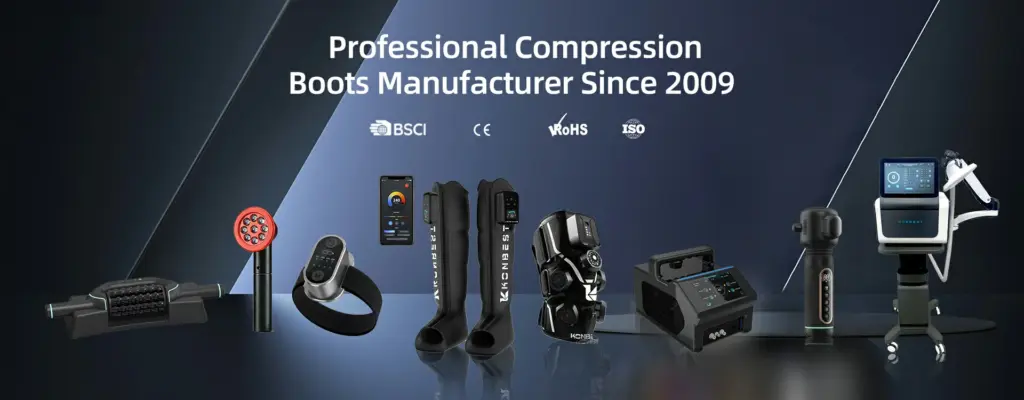
KONBEST presents a one-stop recovery equipment service and offers product categories beyond cold therapy, including compression boots and other recovery equipment. This can be useful when a distributor wants to build a wider sports recovery product range from one manufacturing source.
The company also states that it provides product development and packaging support, which can be useful for brands planning new product launches.
For B2B buyers, the goal is not to find a supplier who simply ships a box. The goal is to build a purchasing process that remains clear when products, order quantities, and market requirements change.
10. Why KONBEST Fits Long-Term B2B Cooperation
For buyers looking for a cold therapy machine wholesale partner, KONBEST offers several points worth reviewing.
- More than 17 years of sports recovery equipment R&D and manufacturing experience.
- Products supplied to more than 100 countries.
- Customization experience with more than 300 brands.
- 12,000-square-meter production facility.
- Five production lines.
- Multiple cold therapy product categories.
- OEM and ODM support for brands and distributors.
- Private label logo and color customization.
- Custom packaging and accessories.
- 2-day sampling support.
- 7-day shipping support, subject to model, quantity, customization, and order conditions.
- Factory inspection support.
- CE, RoHS, BSCI and other certification support according to product and market requirements.
The company page also groups its cold therapy products by application and product type, including ice water therapy machines, cold and heat compression machines, semiconductor cold series products, and ice bath tubs. This gives distributors more flexibility when building a product portfolio.
For a wholesaler, reseller, or distributor, the right partner should therefore be judged by the complete cooperation process: product selection, sample testing, technical confirmation, customization, production, quality inspection, delivery, and after-sales support.
Price is still important, but it should not be the only selection point. A low first quotation has limited value if the supplier cannot keep the same specification, handle repeat orders, or support your next product launch.
A better approach is to start with a clear product requirement, test the supplier with samples, inspect the factory when needed, and then build a purchasing plan around products that fit your market. This creates a stronger base for medium and large-volume B2B orders.
Q&A
1. What should I ask a cold therapy equipment supplier before a bulk order?
Ask about product specifications, cooling performance, accessories, certifications, MOQ, customization, production capacity, lead time, packaging, warranty, spare parts, and quality inspection.
2. Can KONBEST provide private label cold therapy equipment?
Yes. KONBEST supports OEM/ODM services and offers customization for logos, colors, packaging, and accessories. The exact options and MOQ should be confirmed for each model.
3. What cold therapy products can distributors source from KONBEST?
The current range includes ice water therapy machines, cold and heat compression machines, semiconductor cold therapy products, and ice bath tubs.
4. Is KONBEST suitable for medium and large B2B orders?
KONBEST is positioned for distributors, sports brands, gyms, physiotherapy centers, and rehabilitation clinics. Its manufacturing facility, production lines, product range, and customization services are designed to support B2B purchasing programs.
5. Can I inspect the factory before placing a large order?
Yes. KONBEST supports factory inspection for B2B buyers who want to review production capability and quality management before larger cooperation.
6. How should I start a long-term supplier relationship?
Start with a clear product requirement and sample order. Confirm the technical specification and customization details, review the factory when necessary, and then move to a repeat-order plan after the sample meets your requirements.
Looking for a stable manufacturing partner for cold therapy equipment? KONBEST can support product selection, samples, OEM/ODM customization, packaging, accessories, and medium or large B2B purchasing projects.