


Why Hot and Cold Therapy Products Are Becoming the Next Big Opportunity
Sports recovery is becoming an important part of services offered by physiotherapy clinics, gyms, sports clubs, and wellness centers. Customers want more choices, and professional facilities are adding equipment to support different recovery routines. This change is creating new opportunities for equipment agents, distributors, wholesalers, and private label brands.
Hot and cold therapy products are attracting attention because they cover several needs. Some customers look for targeted cold therapy. Others need heating functions, adjustable compression, wearable devices, or ice bath systems. Professional buyers may also want to combine these products with compression boots, red light therapy, and massage equipment.
For B2B buyers, the opportunity is not simply to sell one machine. It is to build a product range that serves different customer groups and supports repeat orders.
However, success depends on product selection and manufacturing support. A reliable hot and cold therapy machine manufacturer should offer clear technical specifications, different product formats, private label options, and stable production capacity.
This article looks at why the market is growing, which products are worth considering, and how KONBEST can help distributors develop a complete sports recovery equipment business.
1. Why Hot and Cold Therapy Is Creating New Business Opportunities
In the past, many fitness and rehabilitation businesses focused on basic equipment such as massage tools, exercise machines, and simple cold packs. Today, more facilities want dedicated recovery areas with different equipment options.
Three changes are making hot and cold therapy products more interesting to professional buyers.
More Facilities Are Building Recovery Areas
Gyms, sports clubs, and training centers are adding recovery equipment to their service spaces. A professional sports team may need cold therapy equipment for athletes after training. A physiotherapy clinic may need a machine that combines temperature control and compression. A wellness center may want an ice bath and other recovery products.
These customers have different budgets and operating needs. Distributors that offer several product types can serve more of them instead of depending on one machine category.
Buyers Want More Functions in One System
Space and equipment costs are important for commercial facilities. A machine that combines cold, heat, and pneumatic compression may offer more operating choices than a single-function product.
For example, a cold and heat compression system can provide adjustable temperature settings and pressure levels in one unit. This gives professional users more options when planning different sessions.
Regional Brands Want Custom Products
Many distributors want to build their own recovery equipment brands. They need products that match their market, brand image, and customer expectations.
Logo printing is only the first step. Buyers may also need custom colors, retail packaging, accessories, labels, and user manuals. This is why choosing a supplier with OEM and ODM experience matters when planning medium or large orders.
2. Four Product Categories Worth Adding to Your Wholesale Catalog
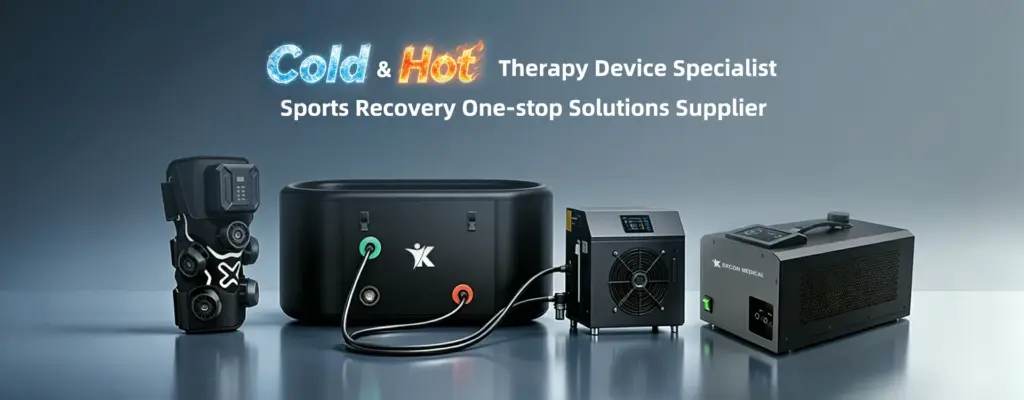
The hot and cold therapy market is not limited to one machine design. Different technologies serve different applications. A well-planned product range should include options for targeted treatment, portable use, professional facilities, and cold-water immersion.
Cold and Heat Compression Systems
These machines combine temperature control with pneumatic compression. They are suitable for professional buyers who want several functions in one device.
The KONBEST EK-810 is one example. It combines cold therapy, heat therapy, and air compression in one system. Its listed specifications include:
- Cold temperature range: 3–15°C.
- Heat temperature range: 40–55°C.
- Adjustable compression pressure: 30–180 mmHg.
- Water tank capacity: 2 liters.
- Water flow: 370 ± 50 L/h.
- Refrigeration capacity: 550W.
- Product weight: approximately 5kg.
- Power adapter: AC 100–240V, 50/60Hz.
These specifications give distributors clear technical points to discuss with professional buyers. The adjustable temperature range and compression settings make the EK-810 suitable for evaluation by physiotherapy clinics, sports recovery centers, and training facilities.
For buyers who want to compare more models, the EK-810 cold and heat contrast compression therapy device page provides further product information.
Other models, including CL08, CL03A, and CL03B, give distributors more choices within the same product category. Buyers should compare their temperature ranges, pressure settings, pad options, and operating requirements before selecting a model.
View the full hot and cold contrast therapy machine range to compare available configurations.
Ice Water Circulation and Cold Compression Machines
Some customers need cold therapy rather than both heating and cooling. Ice water circulation systems are designed to move cooled water through connected therapy wraps. Certain models also add air compression.
The KONBEST CL05B combines ice water circulation and pneumatic compression. Its listed specifications include:
- Functions: ice water circulation and air compression.
- Adjustable pressure range: 30–180 mmHg.
- Water tank capacity: 9 liters.
- Power adapter: AC 100–240V.
- Output: DC12V.
- Machine dimensions: 36 × 25 × 23 cm.
- Product weight: approximately 5kg.
- Listed MOQ: 10–50 sets.
- Listed lead time: 7–15 days.
The CL05B supports different wrap options for areas such as the legs, knees, ankles, shoulders, and elbows. Its dual digital display shows temperature and treatment time.
For clinics, this product format can support targeted cold therapy applications. For sports teams, it offers another option for post-training recovery routines. Distributors can also consider it as a core product when building a cold therapy catalog.
See the CL05B ice water circulation and air compression system for more details.
Wearable Hot and Cold Therapy Devices
Not every customer needs a full-size machine. Some prefer a compact product that can be attached to a selected body area.
Wearable hot and cold devices provide a different product format for sports retailers, fitness businesses, and rehabilitation equipment distributors. Depending on the model, they may offer cooling, heating, or automatic hot and cold cycles.
The KONBEST CL803 is a wearable cold and hot therapy device designed for targeted body areas. Its product category also includes other contrast therapy systems and portable models.
For distributors, wearable devices can fill an important gap in the product range. They can serve customers who want portable equipment, while larger systems can target clinics and professional recovery facilities.
When comparing wearable models, check the temperature range, battery capacity, working time, charging method, weight, wrap design, and included accessories. These details are important for product demonstrations and customer support.
Ice Bath Tubs with Chiller Systems
Ice bath equipment serves a different market from targeted therapy machines. It is designed for cold-water immersion and is often considered by sports teams, training centers, commercial gyms, and wellness facilities.
KONBEST CB02 is an inflatable ice bath tub with a chiller and app remote control. Its insulated structure and connected cooling system provide a dedicated cold immersion option for facilities planning a recovery area.
For sports clubs, an ice bath can be included alongside compression boots and massage equipment. For wellness businesses, it can become one part of a wider recovery service offering.
Before purchasing, confirm the chiller configuration, cooling and heating range, water capacity, filtration system, power requirements, and installation space.
Distributors can review the available ice bath tubs with chiller systems when planning products for sports and wellness customers.
3. Who Is Buying These Products?
One reason hot and cold therapy products are attractive to distributors is that they can serve several business markets. However, each customer group has different purchasing priorities. Understanding these differences helps sales teams recommend the right equipment.
| Target Market | Common Requirements | Suggested Product Direction |
|---|---|---|
| Physiotherapy clinics | Temperature control, compression, targeted wraps, clear operating settings | EK-810, CL08, CL05B |
| Professional sports teams | Cold therapy, portable equipment, multiple recovery options | CL05B, wearable devices, ice bath tubs |
| Commercial gyms | Easy operation, practical product size, flexible product selection | Wearable devices, cold therapy systems, compression boots |
| Rehabilitation centers | Different temperature settings, targeted applications, professional equipment | Contrast compression systems, cold water circulation machines |
| Wellness studios | Cold immersion, heating functions, wider recovery services | CB02, contrast therapy systems, red light devices |
| Sports equipment retailers | Portable products, clear specifications, branded packaging | Wearable devices, compact cold therapy systems |
A distributor should not send the same quotation to every customer. A clinic may need a machine with adjustable temperature and pressure. A sports club may be more interested in cold immersion and equipment for multiple athletes. A retailer may prefer portable products that are easier to display and ship.
Matching products to customer needs makes the sales process more useful and helps buyers understand why one model is more suitable than another.
4. Build a Product Portfolio That Creates More Sales Opportunities
For agents and wholesalers, a single product can be a good starting point, but a complete catalog provides more room to serve different customer groups.
KONBEST offers several related recovery equipment categories that can work together in a distributor's product plan.
Combine Temperature Therapy with Compression Equipment
Cold and heat therapy systems can be offered alongside air compression boots. These products have different functions, but both can be included in a sports recovery equipment catalog.
For example, a sports club may purchase a cold therapy system for targeted applications and add compression boots for leg recovery routines. A distributor can offer different configurations based on the facility's space and budget.
Explore the air compression recovery boots range to see options with different chamber configurations.
Add Red Light Therapy to Expand the Equipment Range
Some professional facilities want more than temperature-based equipment. Red light therapy devices provide another product category for businesses building a wider recovery and wellness offering.
KONBEST offers wearable red light products, full-body blankets, and professional systems. Distributors can select products according to their target customers and sales channels.
See the red light therapy equipment range for related product options.
Include Massage and Other Recovery Products
Massage guns and other muscle care equipment can complement a hot and cold therapy catalog. These products may suit fitness retailers, gyms, and sports accessory distributors that want different price levels and product formats.
The goal is not to sell every product to every customer. It is to build a catalog that gives your sales team suitable options when customers have different requirements.
5. What Should B2B Buyers Check Before Placing a Wholesale Order?
Product functions are important, but medium and large-volume purchasing also involves order planning, quality control, customization, and delivery. Before choosing a supplier, buyers should confirm the following details.
Technical Specifications
Request the latest specification sheet for each model. Check the temperature range, pressure settings, water tank capacity, power input, operating time, compatible wraps, and included accessories.
For products with multiple configurations, make sure the quotation identifies the exact model and package. This avoids confusion between samples and mass-produced orders.
Sample Evaluation
Samples allow buyers to check the machine's operation, materials, controls, accessories, and packaging before approving a larger order.
For private label projects, the sample review should also include logo placement, product color, packaging artwork, and user manual requirements.
MOQ and Production Schedule
Ask for the minimum order quantity, sample preparation time, production lead time, inspection schedule, and shipping arrangements. The CL05B and EK-810 product pages list an MOQ of 10–50 sets and a lead time of 7–15 days. Buyers should confirm the latest terms for their selected model and customization requirements.
Certification and Market Requirements
International buyers should request documents that apply to the exact model and destination market. Depending on the product, these may include CE and RoHS documents, relevant ISO quality management information, BSCI audit documents, and product test reports.
Check the model number, certificate scope, issuing body, and validity. A factory management certificate is not the same as a product safety certificate. Also confirm local requirements for electrical safety, labels, manuals, and importer responsibilities.
Warranty and After-Sales Support
Before confirming an order, ask about warranty coverage, spare parts, technical support, troubleshooting, and the process for handling product issues. These details are especially important for distributors who sell to professional facilities and need to support customers after delivery.
6. OEM and Private Label: Turn Products into Your Own Brand
For regional distributors and established recovery equipment brands, private label products can help create a consistent market identity. However, customization should be planned before production begins.
A complete OEM project may include:
- Brand logo printing on the product.
- Custom product colors.
- Retail packaging and shipping carton design.
- Accessories and product bundles.
- User manuals and product labels in different languages.
- Product configuration changes where technically available.
ODM projects may involve deeper product development based on the buyer's requirements. The available options, costs, MOQ, and lead time depend on the model and the level of customization.
For a smoother process, buyers should prepare their logo files, preferred colors, target market, order quantity, and packaging requirements before requesting a quotation.
KONBEST provides OEM and ODM sports recovery equipment services for brands and distributors that need customized products and packaging.
7. Why Choose a Manufacturer with a Complete Recovery Product Range?
When distributors work with several factories, they may need to manage different quotations, samples, production schedules, product documents, and after-sales contacts. This can make product planning more difficult.
A manufacturer with several related product categories can provide a more direct way to build a complete catalog. Instead of sourcing only one cold therapy machine, buyers can discuss different products for clinics, gyms, sports teams, and wellness businesses within one supply relationship.
KONBEST is an EU-registered sports recovery brand with 17 years of product development and manufacturing experience. Its products are supplied to more than 100 countries, and the company has completed over 300 brand customization projects.
Its manufacturing resources include:
- 12,000 m² manufacturing facility.
- Five production lines.
- Professional R&D and quality inspection teams.
- Advanced production and product testing equipment.
- High-end product showroom for product review.
- Experience with more than 300 brand customization projects.
- More than 20,000 professional athlete endorsements, according to company-provided information.
- Support for qualified factory inspection visits.
The product range covers cold water circulation machines, cold compression systems, hot and cold contrast devices, semiconductor cooling and heating systems, ice bath tubs, compression boots, red light therapy equipment, and massage products.
This range helps distributors build customized product combinations for different customer groups. A clinic may need temperature-controlled compression equipment, while a sports facility may prefer cold immersion, compression boots, and portable devices.
For eligible projects, KONBEST offers a two-day sampling service and a seven-day shipping service. Actual timing depends on stock, model selection, customization, order quantity, production scheduling, and destination.
Buyers can review the KONBEST cold and hot therapy wholesale range to compare available product groups and discuss a sourcing plan.
8. A Simple Plan for Distributors Entering This Market
Buying too many product types at the beginning can make inventory planning difficult. A step-by-step approach is often more practical for a new distributor or a business expanding into recovery equipment.
Step 1: Choose Your Main Customer Group
Decide whether your first target customers are clinics, sports teams, gyms, wellness centers, or retailers. This will help you choose the right product format and price level.
Step 2: Select Two or Three Core Products
Start with products that cover different needs. For example, a distributor may select EK-810 for multi-function temperature and compression settings, CL05B for ice water circulation and air compression, and CB02 for cold-water immersion.
Step 3: Test Samples and Confirm Product Details
Review product functions, materials, accessories, packaging, and technical documents. Confirm that the selected models meet the requirements of your target market.
Step 4: Develop Your Brand and Packaging
Discuss logo, colors, packaging, and accessories with the manufacturer. Approve the final sample and specifications before mass production.
Step 5: Expand into Related Recovery Categories
After building demand for hot and cold therapy equipment, consider adding compression boots, red light therapy devices, and massage products. This gives your business more options when customers want a complete recovery equipment setup.
9. Build Your Hot and Cold Therapy Business with KONBEST
The opportunity in hot and cold therapy is not limited to one machine or one type of customer. Clinics, sports teams, gyms, and wellness centers all have different equipment needs. Distributors who can offer suitable products for these markets have more ways to develop their business.
KONBEST combines 17 years of sports recovery product development and manufacturing experience with a broad product range and OEM/ODM support. From cold water circulation systems and contrast compression machines to wearable devices, ice bath tubs, compression boots, and red light therapy equipment, the company can support customized, one-stop sports recovery equipment sourcing.
If you are an agent, distributor, wholesaler, or reseller planning a medium or large order, prepare your target market, preferred models, estimated quantity, and branding requirements. The KONBEST team can help you compare products and prepare a suitable quotation.
Visit the KONBEST hot and cold therapy wholesale page to review the available range and discuss your OEM, private label, or bulk purchasing project.
Frequently Asked Questions
1. Why are hot and cold therapy products becoming popular with professional facilities?
Clinics, gyms, sports clubs, and wellness centers are adding more recovery equipment to their services. Hot and cold therapy products offer different temperature settings and operating formats, while some models also combine air compression.
2. What is the difference between a cold therapy machine and a contrast therapy machine?
A cold therapy machine focuses on cooling. A contrast therapy machine provides both cold and heat functions. Some contrast models also include pneumatic compression. Buyers should compare the exact functions and specifications of each model.
3. Which KONBEST model combines cold, heat, and compression?
The EK-810 combines cold therapy, heat therapy, and pneumatic compression. Its listed cold temperature range is 3–15°C, heat range is 40–55°C, and compression pressure range is 30–180 mmHg.
4. What are the main features of the CL05B cold compression machine?
The CL05B combines ice water circulation and air compression. It has a 9-liter water tank, adjustable pressure from 30–180 mmHg, and compatible wraps for legs, knees, ankles, shoulders, and elbows.
5. Can I purchase hot and cold therapy machines wholesale?
Yes. KONBEST supports B2B purchasing projects for agents, distributors, wholesalers, and resellers. MOQ, pricing, and lead time depend on the selected model, order quantity, and customization requirements.
6. Does KONBEST offer OEM and private label hot and cold therapy machines?
Yes. Customization options include logo printing, product colors, packaging, and accessories. More detailed product changes can be discussed according to the model and project requirements.
7. Can I source other sports recovery products from KONBEST?
Yes. The product range includes cold therapy machines, contrast therapy systems, ice bath tubs, compression boots, red light therapy devices, and massage equipment. This allows distributors to develop a wider recovery equipment catalog.
8. How long does sampling and shipping take?
KONBEST offers a two-day sampling service and seven-day shipping for eligible projects. Actual timing depends on product availability, customization, order quantity, production schedule, and destination. Confirm the schedule before placing an order.
9. What should I check before importing hot and cold therapy equipment?
Check the model specifications, electrical requirements, applicable certificates and test reports, product labels, user manuals, packaging, warranty, and after-sales terms. Requirements vary by product and destination market.
10. Can KONBEST support factory inspections for large orders?
Yes. Factory inspection support is available for qualified B2B buyers. You can discuss the inspection schedule, production lines, quality inspection process, and order requirements with the KONBEST team.