

How to Find a Reliable Red Light Therapy Manufacturer
Choosing a red light therapy manufacturer for bulk purchasing is very different from buying one device for personal use. When you are a distributor, wholesaler, or reseller, you need a factory that can keep product quality, specifications, customization, and delivery stable across repeated orders.
A good-looking product page is not enough. Before placing a medium or large order, you should know who makes the device, what technology is inside, how the factory controls production, what customization is available, and whether the supplier can support your market for the long term.
KONBEST has more than 17 years of experience in sports recovery equipment R&D and manufacturing. Its products are supplied to more than 100 countries, with experience serving more than 300 customized brands. The company operates a 12,000-square-meter factory with 5 production lines, professional R&D and quality inspection teams, and a high-end product showroom.
So, how can you tell whether a red light therapy factory is ready for B2B orders? The following points can help you make a more practical decision.
- 1. Check Whether You Are Dealing With a Real Manufacturer
- 2. Look Beyond the Red Light on the Product Page
- 3. Choose a Supplier With More Than One Product Option
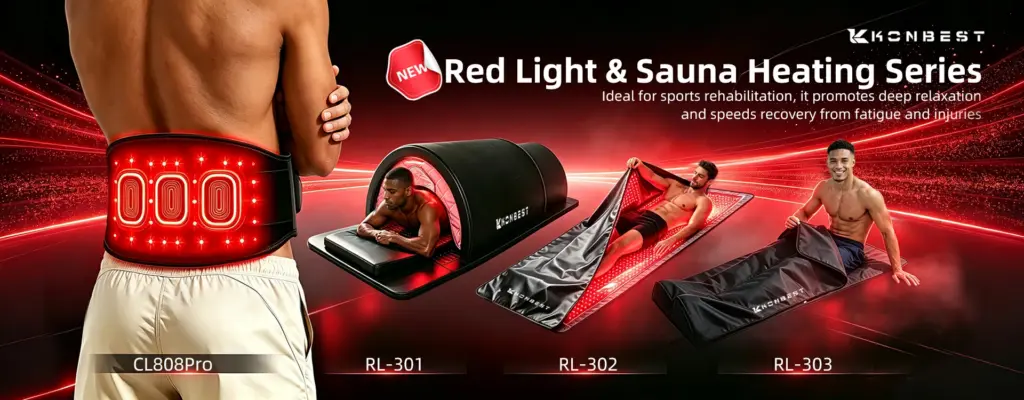
- 4. RL302: A Full-Body Option for Professional Spaces
- 5. RL301: A Multi-Function System for Higher-Level Facilities
- 6. RL202: A Compact Option for Portable Use
- 7. Build the Right Order for Your Distribution Channel
- 8. Check OEM and Private Label Capability
- 9. Ask How the Factory Controls Quality
- 10. Why KONBEST Fits Medium and Large B2B Orders
- 11. Q&A
1. Check Whether You Are Dealing With a Real Manufacturer
The first question should not be "What is your price?" It should be "What can your factory actually do?"
This is important because many companies can show similar red light therapy products, but their manufacturing capabilities may be very different. Some may only trade standard products, while a real manufacturer can control product development, production, testing, packaging, and customization.
For B2B purchasing, check these points before discussing a large order:
- Years of manufacturing experience
- Factory size and production lines
- R&D and engineering support
- Quality inspection process
- OEM and ODM capability
- MOQ for each model
- Sample and bulk production lead time
- Factory inspection availability
- Warranty and after-sales support
KONBEST has been working in sports recovery equipment for more than 17 years. Its factory setup is designed for ongoing production rather than one-time trading orders. For distributors and wholesalers planning repeat purchases, this difference can make the supply process much easier.
2. Look Beyond the Red Light on the Product Page
"Red light therapy" can describe many different products. A reliable red light therapy supplier should give you clear technical information so you can compare products properly.
Start with the wavelength. Then look at LED quantity, light density, rated power, treatment area, operating modes, timer, battery, product size, weight, and other functions.
It also provides three light modes and five power levels. Users can select continuous, 10Hz, or 40Hz pulse modes, with a timer from 10 to 60 minutes.
These details are much more useful than simply calling a product "high power" or "professional." When you compare products from different factories, real specifications give your purchasing team something measurable to work with.
These details are much more useful than simply calling a product "high power" or "professional." When you compare products from different factories, real specifications give your purchasing team something measurable to work with.
3. Choose a Supplier With More Than One Product Option
A distributor rarely has only one type of customer. A gym may want a full-body system, while a home-use reseller may need a compact wearable device. A professional recovery center may be interested in a larger multi-function system.
That is why a wider product portfolio can be useful when choosing a red light therapy wholesale supplier.
Instead of asking a factory for its cheapest model, first divide your market into different application levels:
- Large recovery spaces: full-body products with broad coverage.
- Gyms and fitness facilities: easy-to-use equipment for post-training recovery areas.
- Wellness centers: larger systems with additional functions and a more complete user experience.
- Online resellers: compact products that are easier to package and ship.
- Regional distributors: several models covering different customer requirements.
- Private-label brands: products that can be customized with brand identity and packaging.
A supplier with several suitable models can also make future product expansion easier. You can start with one product, collect market feedback, and then add another model without changing the whole supply chain.
4. RL302: A Full-Body Option for Professional Spaces
For buyers looking for a large-area red light product, the KONBEST RL302 Red Light Therapy Blanket is worth reviewing.
The blanket combines 660nm red light and 850nm near-infrared light. Its 2,240 LEDs provide a large light-emitting area, while the 180 × 180 cm design is made for broad full-body coverage.
The main specifications include 112mW/cm² light density, 200W rated power, three light modes, five power levels, and a 10–60 minute adjustable timer.
Another practical point is the foldable design. A large recovery product does not always need to take up a large amount of storage space. This makes the RL302 easier to consider for gyms, sports recovery centers, wellness rooms, and other facilities where available space matters.
For distributors, it can work as a full-body model in a broader product range. For wholesalers, it can be included in a professional recovery equipment catalog instead of being sold as a standalone consumer item.
5. RL301: A Multi-Function System for Higher-Level Facilities
Some B2B customers are not looking for a simple red light panel. They want a larger system that combines several recovery-related functions.
The KONBEST RL301 Red Light Infrared Sauna Dome takes this approach.
It combines red light, near-infrared light, far-infrared heating, PEMF, mineral stone elements, and negative-ion purification in one system. It uses 660nm and 850nm light, with 896 visible red light LEDs and 224 three-chip near-infrared LEDs.
The listed light density is 120–130mW/cm². The dome temperature can be adjusted from 25–90°C, while the mat temperature range is 25–80°C. The PEMF function supports a 1–30Hz range, and the timer can be set from 5 to 60 minutes.
With 1200W rated power and a gross weight of about 35kg, this is a larger professional product rather than a portable home device.
It can be considered for sports recovery centers, premium gyms, wellness facilities, and other professional locations where customers expect a more complete equipment setup.
For a distributor, this kind of product can fill the professional end of a product portfolio while smaller devices serve other sales channels.
6. RL202: A Compact Option for Portable Use
On the other side of the product range is the RL202 Wearable Mini Red Light Therapy Device.
The RL202 uses 660nm and 850nm light and has five operating modes. It weighs only 30g and uses a 450mAh battery. The listed working time is about 90–105 minutes, and Type-C charging makes it convenient for regular use.
The device can be used with an adjustable 1-meter strap or adhesive patches. This makes it easier to position around areas such as the knee, shoulder, waist, arm, wrist, or ankle.
For a red light therapy devices distributor, this type of product can fill a very different market position from a full-body blanket. It is small, portable, and easier to include in online retail, sports accessory, wellness, and targeted recovery product lines.
The listed MOQ is 2,000 units, which also shows why MOQ should be discussed early. A product may look suitable for your market, but the quantity requirement needs to match your purchasing plan.
7. Build the Right Order for Your Distribution Channel
For medium and large B2B buyers, the best order is not always the biggest order. The better approach is to build an order around your sales channels and customer demand.
For a medium-volume order
Start with one or two models that have clear applications. For example, a distributor could select a full-body blanket for gyms and recovery centers, then add a wearable device for smaller retail channels.
Before bulk production, request samples and check the actual product. Test the controls, light modes, materials, accessories, packaging, and user instructions. If the sample meets your requirements, confirm the final specifications before production.
For a large-volume order
Larger orders need more planning. Confirm the exact model, quantity, packaging, accessories, logo, color, shipping schedule, inspection requirements, and quality standards before production starts.
It is also useful to discuss your estimated repeat-order volume with the factory. A manufacturer that understands your long-term purchasing plan can recommend a more suitable product combination and production arrangement.
KONBEST supports 2-day sampling for applicable projects and 7-day shipping for applicable orders. Actual lead time should be confirmed according to the model, order quantity, customization, and shipping destination.
8. Check OEM and Private Label Capability
If you are a reseller or distributor building your own brand, standard factory packaging may not be enough. You may need a proper red light therapy OEM partner.
Ask what the factory can customize before placing the order. Useful options can include:
- Private label logo
- Product color
- Retail packaging
- User manuals and labels
- Accessories
- Product configuration
KONBEST supports private label logo and color customization, packaging, and accessory customization. This gives buyers more control over the final product presentation.
ODM can be useful when you need more than a logo change. If you have a specific product idea or customer requirement, you can discuss functions, appearance, configuration, and other product details with the manufacturer's R&D team.
For a distributor planning repeat orders, this can be more practical than changing suppliers every time a new customization requirement appears.
9. Ask How the Factory Controls Quality
Do not stop at a certificate list.
For a large order, you should also ask how the factory checks the product during production and before shipment. A good quality process should cover the important components, electrical functions, finished-product performance, appearance, packaging, and other agreed specifications.
KONBEST has professional R&D and quality inspection teams and provides products for international markets. Its applicable products and projects can be supported by certifications and compliance documents such as CE, ISO, RoHS, and BSCI.
Buyers should confirm the exact certificates and test documents for the specific model and destination market. This is especially important when importing equipment into different countries because market requirements can vary.
For medium and large orders, factory inspection is another useful step. KONBEST supports factory inspection, allowing buyers to review the production environment and discuss manufacturing requirements directly with the factory.
10. Why KONBEST Fits Medium and Large B2B Orders
A reliable manufacturer should be able to support more than one shipment. It should have the production foundation, technical team, product range, and communication process needed for long-term cooperation.
KONBEST brings more than 17 years of sports recovery equipment R&D and manufacturing experience. Its products are supplied to more than 100 countries, and it has completed customized projects for more than 300 brands. More than 20,000 professional athletes have provided product use or endorsement support.
The 12,000-square-meter factory has 5 production lines, supported by R&D and quality inspection teams. A high-end product showroom also allows buyers to review different recovery equipment solutions in one place.
More importantly for B2B purchasing, KONBEST is not limited to red light equipment. Its product range covers compression recovery, cryotherapy, red light therapy, and other sports recovery equipment.
This makes it possible for distributors and wholesalers to discuss a wider recovery equipment program with one manufacturing partner. A buyer can start with red light products and later add compression boots, cold therapy equipment, or other recovery products as the market develops.
When selecting a red light therapy manufacturer, think about the complete purchasing process. Can the factory provide the right product? Can it show clear specifications? Can it make samples? Can it handle your quantity? Can it customize the product? Can you inspect the factory? Can it support your next order?
If the answer is yes across these areas, you are looking at a manufacturer that is much more suitable for serious B2B purchasing.
To compare models and start a bulk purchasing discussion, visit the KONBEST Red Light Therapy Device collection. You can request product specifications, samples, OEM details, MOQ, and a quotation based on your required quantity.
11. Q&A
How do I know if a red light therapy manufacturer is reliable?
Check its manufacturing history, factory size, production lines, R&D team, QC process, product specifications, OEM capability, certifications, sample service, inspection support, and after-sales policy. These points are more useful than comparing price alone.
What specifications are important when buying red light therapy devices?
Wavelength, LED quantity, light density, rated power, coverage area, operating modes, timer, battery capacity, dimensions, weight, and accessories are important points to compare.
Is 660nm and 850nm a useful combination?
Many red light therapy products use 660nm visible red light together with 850nm near-infrared light. The actual product performance also depends on LED configuration, light density, power, coverage, and device design, so buyers should review the complete specification rather than one number.
What red light product is suitable for a distributor?
It depends on the target customers. Full-body blankets can suit gyms and recovery centers, multi-function systems can fit professional facilities, while wearable devices can suit portable and online retail channels. A mixed product range can cover more customer requirements.
Can KONBEST make private label red light therapy products?
Yes. KONBEST supports private label logo, color, packaging, and accessory customization. OEM and ODM requirements can also be discussed with the factory according to the selected product.
Can I order samples before a large quantity?
Yes. Sample orders can be arranged before bulk production. KONBEST supports 2-day sampling for applicable projects, while the final sample schedule depends on the model and customization requirements.
Does KONBEST support factory inspection?
Yes. Factory inspection is supported. Buyers planning medium or large orders can discuss inspection arrangements and quality requirements with the KONBEST team before production.
Can KONBEST supply other sports recovery equipment?
Yes. Besides red light therapy products, KONBEST has a wider sports recovery product range, including compression boots, cryotherapy equipment, and other recovery devices. This can help distributors build a more complete recovery equipment portfolio through one supplier.