


What Retail Chains Look For Before Signing Long-Term Factory Agreements
Many retail chains start with product selection.
But experienced procurement teams know that products alone do not determine long-term success.
The real challenge begins after demand grows.
Can the factory maintain quality?
Can it handle larger orders?
Can it support private label requirements across multiple locations?
Can it continue delivering on time year after year?
These questions are why more retail chains carefully evaluate every private label recovery equipment manufacturer before signing long-term agreements.
For recovery equipment categories, choosing the right manufacturing partner is often more important than choosing the product itself.
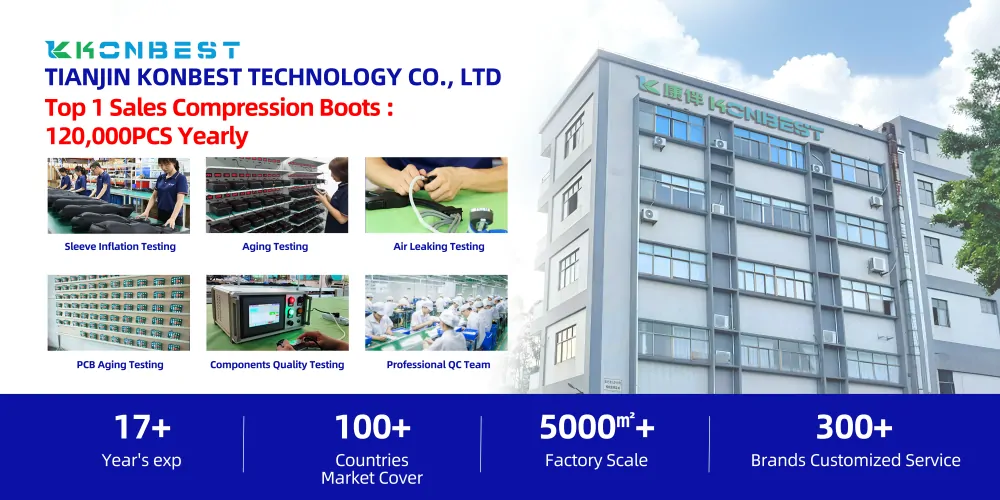
KONBEST has spent 17 years developing and manufacturing sports recovery equipment. The company exports to more than 100 countries, supports over 300 customized brands, and has earned recognition from more than 20,000 professional athletes worldwide.
With a 5000㎡ manufacturing facility, 5 production lines, advanced R&D capabilities, strict quality control systems, and complete recovery product solutions, KONBEST helps distributors, wholesalers, and retail chains build stable supply systems for long-term growth.
Table of Contents
- Why many factories fail retail chain evaluations
- Why supply stability matters more than quotations
- How private label capability affects expansion plans
- What happens when order volume increases
- Why recovery equipment continues gaining attention
- What defines a true manufacturing partner
- Who benefits most from long-term factory cooperation
- Q&A
Why Many Factories Fail Retail Chain Evaluations
Many factories perform well when handling small orders.
However, retail chains evaluate suppliers differently.
They look beyond samples and pricing.
They examine whether the factory can support operations over multiple years.
They examine whether the factory can support operations over multiple years.
- Production consistency
- Quality management systems
- Communication efficiency
- OEM project management
- Export experience
This is why experienced buyers often choose an established sports recovery equipment factory with a proven international track record.
Why Supply Stability Matters More Than Quotations
Retail chains depend on predictable inventory planning.
When a supplier cannot maintain stable production schedules, problems quickly spread through the entire sales network.
Potential risks include:
- Inventory shortages
- Missed launch schedules
- Delayed replenishment orders
- Inconsistent customer experience
While pricing remains important, procurement managers often prioritize supply stability because operational disruption creates far greater challenges.
This is why many retail chains prefer working with a reliable recovery equipment manufacturing partner instead of frequently changing suppliers.
How Private Label Capability Affects Expansion Plans
As retail chains expand into new regions, brand consistency becomes increasingly important.
Customers expect products, packaging, and brand presentation to remain the same across all locations.
KONBEST supports:
- Private label customization
- Custom packaging solutions
- Brand-specific product development
- Logo integration services
- Long-term OEM project management
Strong OEM systems help retail chains maintain a professional image while expanding into new markets.
What Happens When Order Volume Increases
The biggest difference between ordinary factories and professional manufacturers appears when order volume grows.
As demand increases, factories must manage:
- Higher production requirements
- More complex inventory planning
- Multiple shipment schedules
- Consistent quality standards
KONBEST supports scaling through:
- 5 dedicated production lines
- Advanced quality control systems
- 2-day sampling capability
- 7-day shipping support
- Factory audit availability
This infrastructure helps buyers reduce sourcing uncertainty during expansion.
Why Recovery Equipment Continues Gaining Attention
Recovery solutions are becoming standard equipment in many commercial environments.
Compression recovery boots are increasingly used in:
- Sports training centers
- Rehabilitation clinics
- Fitness clubs
- Professional sports facilities
- Wellness centers
Modern recovery systems provide adjustable air compression, multiple recovery modes, user-friendly operation, and durable construction for continuous commercial use.
As awareness grows, more buyers are adding recovery products to their equipment portfolios.
What Defines a True Manufacturing Partner
A factory becomes a long-term partner when it supports more than production.
Retail chains expect support in:
- Product development
- Quality assurance
- OEM execution
- Supply chain planning
- Future expansion projects
This is why successful buyers often work directly with a professional commercial recovery equipment supplier that can support long-term strategic goals.
Many growing brands also prefer cooperating with a dedicated recovery equipment private label factory that understands how market expansion affects manufacturing requirements.
Who Benefits Most From Long-Term Factory Cooperation
- Retail chains expanding regionally
- Medium and large distributors
- Recovery equipment wholesalers
- Private label brand owners
- International importers
These organizations require stability, scalability, and long-term operational support.
Q&A
Q1: Why do retail chains carefully evaluate manufacturing partners?
A: Because long-term supply stability affects inventory planning, customer experience, and future expansion.
Q2: What is the biggest factor after product quality?
A: Reliable production and delivery capability during growth periods.
Q3: Why is private label support important?
A: It helps retail chains maintain consistent branding across different markets and locations.
Q4: What should buyers look for in a manufacturing partner?
A: Export experience, production capacity, quality control systems, and OEM expertise.
Q5: Who benefits most from long-term factory agreements?
A: Distributors, wholesalers, retailers, and brand owners planning sustained market expansion.