

How to Launch Your Own Red Light Therapy Brand with OEM Manufacturing
Building a red light therapy brand is a major step for distributors, wholesalers, and established resellers. The market offers different product formats, from small wearable devices to full-body red light therapy systems. The challenge is choosing the right products, finding a capable manufacturer, and creating a brand that customers can trust.
You do not need to develop every product from zero. Working with an experienced red light therapy manufacturer allows you to select existing models, add your own brand identity, and prepare products for your target market. With the right OEM partner, you can build a product range without setting up your own production facility.
KONBEST is an EU-registered sports recovery brand with 17 years of product development and manufacturing experience. Its product range includes wearable red light therapy devices, full-body blankets, multi-function recovery systems, and other sports recovery equipment. The company supports private label services for international distributors, wholesalers, and sports recovery brands.
This guide explains how to turn a product idea into a market-ready red light therapy brand, how to select products for different customer groups, and what to check before placing a medium- or large-volume OEM order.
Table of Contents
- 1. Start with a Clear Market Position
- 2. Build a Product Range That Customers Can Understand
- 3. Match Product Specifications to Real Business Needs
- 4. Create a Private Label Brand, Not Just a Logo
- 5. Prepare Products for Your Target Country
- 6. What to Check in a Red Light Therapy Manufacturer
- 7. Plan Your First Wholesale Order Carefully
- 8. A Practical 90-Day Brand Launch Plan
- 9. Frequently Asked Questions
1. Start with a Clear Market Position
Before choosing products, decide what kind of brand you want to build. A brand that sells portable wellness equipment has different needs from a supplier serving sports recovery centers. Your product selection, packaging, technical information, and sales message should all match your target customers.
For most B2B buyers, three market directions are worth considering.
Sports and Fitness Recovery
Gyms, personal training studios, sports clubs, and professional teams often need equipment that can fit into regular recovery programs. Wearable red light devices are useful for businesses looking for compact products that can be applied to selected body areas.
Wellness and Home Recovery Retail
Wellness stores and online retailers may prefer easy-to-use products with clear functions and convenient storage. Full-body blankets can give these businesses a different product category from small handheld devices.
Professional Recovery and Rehabilitation Equipment
Sports recovery centers, physiotherapy businesses, and professional equipment distributors may need larger systems with more functions. Multi-function products can help them build a higher-specification equipment range.
The key is to avoid selling every model to every customer. Choose products based on the needs of each market. This makes your catalog easier to understand and helps your sales team explain why one model is different from another.
2. Build a Product Range That Customers Can Understand
A good product portfolio should have a clear structure. Instead of filling your catalog with many similar devices, build a product ladder with different sizes, functions, and use cases.
Entry Product: Portable Wearable Devices
Portable products are suitable for distributors who want to add a compact recovery category to an existing fitness or wellness catalog.
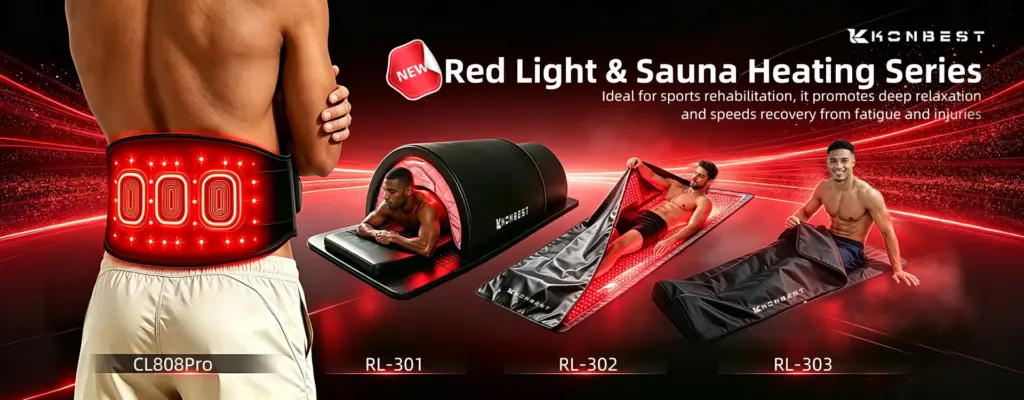
The KONBEST RL201 portable wearable red light therapy device uses two wavelengths: 660nm red light and 850nm near-infrared light. It offers four operating modes, a 5/10/15/20-minute timer, and a 1200mAh rechargeable battery. The listed battery use time is up to 180 minutes.
Its cordless design makes it suitable for sports training centers, gyms, and businesses that need a portable device for targeted applications. For resellers, this format is also easier to present as a compact product within a wider sports recovery range.
Core Product: Full-Body Red Light Therapy Blanket
For brands targeting home wellness customers, recovery studios, and fitness businesses, a full-body product can become a core catalog item.
The KONBEST RL302 combines 660nm red light and 850nm near-infrared light. Its main specifications include:
- 2,240 LED units in total
- 1,792 red-light LEDs at 660nm
- 448 near-infrared LED units at 850nm
- 112mW/cm² listed light density
- 200W rated power
- Continuous, 10Hz, and 40Hz modes
- Five adjustable power levels
- 10–60-minute timer
- Foldable full-body design
- One-year warranty listed on the product page
The wide coverage format is suitable for wellness businesses that want to offer a full-body light product. Its foldable design also helps customers store the product when it is not in use.
For wholesale buyers, the combination of two wavelengths, adjustable settings, and a full-body format gives the sales team several clear product features to explain.
Professional Product: Multi-Function Recovery System
Some customers need more than a standard red light device. Professional recovery centers and premium wellness facilities may prefer products that combine several functions in one system.
The KONBEST RL301 is a 5-in-1 red light infrared sauna dome. Its listed functions include red light, near-infrared light, far-infrared heating, PEMF, and negative-ion features. The product specifications include:
- 896 visible red-light LEDs at 660nm
- 224 near-infrared LED units at 850nm
- 120–130mW/cm² listed light density
- PEMF frequency range of 1–30Hz
- Dome temperature range of 25–90°C
- Mat temperature range of 25–80°C
- 1200W rated power
- 5–60-minute timer
- Product size: 180 × 80 × 45cm
- One-year warranty listed on the product page
The RL301 is designed for businesses that want to offer a more complete recovery and wellness experience. Its multiple functions also create more opportunities for product demonstrations and professional equipment sales.
Buyers should confirm the final configuration, electrical requirements, included accessories, and user instructions before placing an order.
Build a Wider Recovery Catalog
A red light therapy brand can also connect with other recovery product categories. KONBEST offers additional products, including red light massage equipment and cold and hot recovery devices. The RL303 is a far-infrared sauna blanket, which can be positioned as a separate heating product rather than an LED red light therapy device.
This product range gives distributors more choices when they want to build a wider sports recovery catalog from one manufacturing partner.
3. Match Product Specifications to Real Business Needs
| Product Detail | What to Check | Business Value |
|---|---|---|
| Wavelength | 660nm red light and 850nm near-infrared light, where applicable | Helps define the device's light configuration and product positioning. |
| LED quantity | Total LED units and the number used for each wavelength | Provides a clearer basis for comparing product designs. |
| Light density | Output value, measurement distance, and test method | Supports more accurate technical comparisons. |
| Coverage | Wearable, targeted-area, or full-body format | Helps match products to different customer settings. |
| Operating modes | Continuous light, pulse modes, power levels, and timer | Makes product functions easier to demonstrate and explain. |
| Power supply | Rated power, voltage, plug, and electrical safety requirements | Important for importing and selling in different countries. |
| Materials and accessories | Product materials, controller, adapter, and package contents | Helps confirm what the customer will receive. |
For example, a portable wearable model may be more suitable for a retailer that values compact products. A full-body blanket may fit a wellness studio's service plan better. A multi-function dome may be a better match for a professional recovery facility.
Do not compare two devices only by LED count or power rating. Ask the manufacturer for the complete product specification sheet and the test conditions behind important performance figures. This helps prevent unclear or misleading product claims in your own marketing.
4. Create a Private Label Brand, Not Just a Logo
Private label red light therapy gives your business control over how products look and how customers recognize your brand. However, a successful private label project should include more than logo printing.
Product Logo and Appearance
Use a consistent logo position, product color, label design, and brand style across your selected models. KONBEST supports private label logo application and color customization for applicable products. Confirm the available colors and customization methods for each model before approving the order.
Retail and Professional Packaging
Packaging should fit your sales channel. Online retailers may need attractive retail packaging and clear product information. Professional equipment distributors may need stronger shipping protection, technical labels, and product information for business customers.
Accessories and User Materials
Accessory selection can also affect the final product offer. Discuss the included components, optional accessories, user manuals, labels, and other printed materials with the manufacturer. If you sell in several countries, prepare suitable language versions and check local labeling requirements.
Keep Your Brand Consistent
If you plan to sell three models, make sure the product names, packaging, manuals, and visual design look like they belong to the same brand. A consistent product family is easier for distributors to present to retailers and easier for customers to recognize.
Before mass production, approve the sample, logo artwork, color, packaging layout, and accessory list in writing. Keep the approved sample or signed specification as the reference for the production order.
5. Prepare Products for Your Target Country
A product that is ready for one market may need changes before it can be sold in another. This is especially important for distributors importing red light therapy devices into the EU, the United States, or other international markets.
Before confirming an order, check the following points:
- Electrical requirements: Confirm the correct voltage, plug type, power adapter, and frequency requirements for the destination country.
- Product documents: Request the applicable certificates, test reports, and declarations for the exact model being purchased.
- Labels and manuals: Check whether local-language instructions, warnings, and product labels are needed.
- Product claims: Make sure your website, packaging, and sales materials use claims supported by the product's evidence and regulatory status.
- Warranty and service: Agree on warranty coverage, spare parts, technical support, and the process for handling customer issues.
CE and RoHS documents should be checked against the specific product and the relevant market requirements. ISO usually refers to a management-system standard, while BSCI relates to social compliance in the supply chain. These documents serve different purposes and should not be treated as interchangeable product certifications.
Also, do not describe a red light device as a medical device unless its regulatory status supports that claim in your target market. Product descriptions should clearly explain the device's functions without promising to diagnose, treat, or cure medical conditions unless such claims are legally supported.
6. What to Check in a Red Light Therapy Manufacturer
Manufacturing Capacity
Ask about factory size, production lines, equipment, and quality inspection procedures. A supplier should be able to explain how it manages production when several models or customized orders are running at the same time.
Product Development and Quality Control
Check whether the manufacturer has an R&D team and product testing equipment. Ask how incoming materials, production processes, finished products, and final packaging are inspected.
OEM and Customization Experience
Ask whether the supplier has completed private label projects for overseas brands. Experience with logo placement, color changes, packaging, and accessory customization can make the project easier to manage.
International Order Experience
For importers and regional distributors, the supplier should understand export packaging, shipping documents, product manuals, and communication across different time zones.
KONBEST reports 17 years of sports recovery product development and manufacturing experience, a 12,000-square-meter factory, five production lines, and dedicated R&D and quality inspection teams. Its products have been supplied to more than 100 countries, and the company reports experience with over 300 brand customization projects.
KONBEST also reports product experience involving more than 20,000 professional athletes. Its product showroom and wider sports recovery range support buyers who want to assess several product categories with one supplier.
For larger projects, buyers can request a factory inspection and discuss the production process directly with the team. This gives purchasing managers a better understanding of the supplier before making a long-term commitment.
7. Plan Your First Wholesale Order Carefully
A well-planned first order can help you test your product range while preparing for repeat purchasing. The goal is not simply to order as many units as possible. It is to select a suitable product mix and confirm every important detail before production begins.
Use a Product Mix Instead of Ordering Similar Models
A distributor serving gyms and wellness retailers might start with a portable wearable model and a full-body blanket. A professional equipment wholesaler may add a multi-function system for larger recovery facilities.
This approach gives your sales team more than one product type to present. It also helps you understand which product formats receive the strongest response from your customers before expanding the range.
Confirm the Commercial Terms
Before issuing a purchase order, confirm:
- Model numbers and exact product configurations
- MOQ and unit pricing for each model
- Logo, color, packaging, and accessory requirements
- Sample cost and sample approval process
- Production lead time and shipping arrangements
- Warranty period and after-sales responsibilities
- Required product documents and inspection standards
- Payment terms and order change procedures
The KONBEST RL301 and RL302 product pages list an MOQ of 100 sets, a 7–15-day lead time, and a one-year warranty. These details should be reconfirmed with the sales team because the final terms may depend on the order configuration, customization, stock, and production schedule.
Use Samples to Reduce Purchasing Risk
Do not approve a large order based only on product photos. Test the sample, review its functions, check the materials and accessories, and compare it with the approved specifications. For a private label project, also check the logo, color, packaging, and printed materials.
KONBEST supports 2-day sampling for applicable projects and 7-day shipping under suitable order conditions. These timelines are subject to product availability, order quantity, customization requirements, and destination. Confirm the actual schedule before making delivery promises to your own customers.
8. A Practical 90-Day Brand Launch Plan
A clear launch schedule helps your team move from product selection to sales preparation. The actual timing depends on the product, customization scope, and destination market, but the following plan provides a useful starting point.
| Stage | Main Tasks | Expected Result |
|---|---|---|
| Days 1–15 | Research target customers, compare product types, and select models. | A clear product range and purchasing brief. |
| Days 16–30 | Request samples, review specifications, and check market requirements. | Approved product direction and technical details. |
| Days 31–45 | Confirm logo, color, packaging, accessories, and manuals. | Approved private label design. |
| Days 46–70 | Confirm the order, production schedule, inspection requirements, and shipping plan. | A controlled bulk production project. |
| Days 71–90 | Prepare product pages, sales materials, staff training, and distribution plans. | A sales-ready product range, subject to production and shipping timing. |
Use this schedule as a planning guide rather than a guaranteed delivery promise. Product development, certification work, custom packaging, and international shipping may require additional time.
Launch Your Own Red Light Therapy Brand with KONBEST
Launching a brand is easier when your manufacturing partner can support product selection, customization, production, and long-term supply. KONBEST works with distributors, wholesalers, importers, resellers, gyms, and sports recovery brands that need dependable equipment and private label services.
With 17 years of manufacturing experience, a 12,000-square-meter factory, five production lines, and a product range covering several recovery categories, KONBEST can support businesses that want to develop more than one product line.
OEM support includes private label logos, product color customization, packaging, and accessories for applicable models. Buyers can also request samples, discuss factory inspections, and confirm production arrangements for medium- and large-volume orders.
If you are planning to launch or expand your own red light therapy brand, prepare your target market, preferred models, estimated order quantity, and customization requirements.
View the KONBEST red light therapy product range or contact the KONBEST team for an OEM and wholesale quotation.
9. Frequently Asked Questions
Q1: How do I start my own red light therapy brand?
First, define your target customers and sales market. Then select suitable red light therapy devices, compare technical specifications, request samples, and choose an OEM manufacturer. After approving the product and brand design, confirm the bulk order and prepare your sales materials.
Q2: What is OEM manufacturing for red light therapy devices?
OEM manufacturing allows a business to sell products made by a manufacturer under its own brand or according to agreed product requirements. Depending on the project, services may include logo printing, color customization, packaging, and accessory selection.
Q3: Which red light therapy devices are suitable for wholesale?
It depends on your customer group. Wearable devices such as the RL201 are suitable for portable product ranges. The RL302 is a full-body blanket format for wellness and recovery businesses. The RL301 is a multi-function system for professional facilities.
Q4: What wavelengths should I compare when buying red light therapy devices?
Many devices use 660nm red light and 850nm near-infrared light. Buyers should check the wavelength, LED configuration, light density, measurement method, and product design rather than relying on one specification alone.
Q5: Can KONBEST customize products with my own brand?
KONBEST supports private label logo application, color customization, packaging, and accessory options for applicable models. Confirm the available choices and MOQ for each selected product before starting the project.
Q6: What is the MOQ for KONBEST red light therapy products?
The RL301 and RL302 product pages list an MOQ of 100 sets. MOQ may differ across models and customization projects. Contact the KONBEST team to confirm the current requirement for your order.
Q7: How long does OEM production take?
The RL301 and RL302 product pages list a 7–15-day lead time. Actual production and delivery timing depends on order quantity, product availability, customization, inspection, and shipping destination. Confirm the schedule in your quotation or purchase agreement.
Q8: Can KONBEST support factory inspections?
Yes. Buyers can discuss factory inspection arrangements with the KONBEST team. This can help purchasing managers review production facilities, quality control procedures, and manufacturing capability before placing a larger order.
Q9: Can I buy other sports recovery equipment from KONBEST?
Yes. KONBEST offers a wider range of sports recovery products, including compression boots, cold therapy equipment, and other recovery devices. This allows distributors to discuss a broader product portfolio with one supplier.
Q10: What information should I send when requesting an OEM quotation?
Provide your target country, preferred models, estimated quantity, logo requirements, product color, packaging needs, accessory list, and required product documents. The more complete your information is, the easier it is for the manufacturer to prepare a suitable quotation and production plan.